
More Insights
See all






%20Might%20Disappear%20%E2%80%93%20and%20What%20to%20Do%20About%20It.png)
185K+
Websites + Marketplaces Tracked
1M+
Merchants Tracked
1.2M+
of Automated Actions Initiated Monthly
2.4B+
of Data Points Tracked
.webp)
Retail stores that achieve the highest sales with the highest profit margins are considered successful. To achieve this, an organization’s sales and marketing department must employ various strategies to attract as many customers as possible while outperforming competitors. One often-used tactic is to set retail prices as low as possible.While this is a win for consumers, such a business practice can encourage price wars and set a precedent for market monopolies, brand equity erosion, and product devaluation. To prevent these problems and protect all parties' interests, governments allow pricing policies to be set under Fair Trade Laws. One of these policies is the MAP Pricing Policy. This article shares the foundations of MAP policies you need to know as a brand owner or manufacturer.
MAP, which stands for Minimum Advertised Price, refers to the lowest price at which a manufacturer allows its products to be advertised or publicly displayed. Brands establish this guideline to maintain price parity and encourage fair competition among retailers that sell their products.
Retailers are typically prohibited from advertising goods below this minimum price, although they can sell the products at any price they choose. However, suppose a retailer breaches a MAP policy. In that case, the manufacturer or brand has the legal right to cease business with that trade partner under the Federal Trade Commission’s Antitrust Law.A MAP policy aims to protect a brand’s image, maintain perceived product value, and create a fair competitive environment among retailers.
Another guideline that is sometimes mistaken for MAP Policy Pricing is the MSRP (Manufacturer's Suggested Retail Price). The MSRP recommends to manufacturers how much their products should be sold. It also guides retailers about the brand’s suitable selling price for their goods. However, unlike MAP, it doesn't dictate the minimum advertised price or impose penalties for deviations.In summary, MSRP allows retailers to adjust prices based on market conditions. At the same time, MAP Policy pricing outlines a minimum price for promoting products to ensure brand integrity and pricing consistency.
Another type of MAP focuses on regulating product price advertising on the Internet. It is called the IMAP (Internet Minimum Advertised Price) or eMAP (Electronic Minimum Advertised Price). Simply speaking, IMAP specifically addresses online advertising, acknowledging the unique challenges and dynamics of e-commerce.
IMAP or eMAP extends the MAP concept from all traditional advertising channels to the digital/online realm, ensuring that online retailers adhere to a minimum advertised price.
Setting a Minimum Advertised Price (MAP) is crucial for brands as it plays a pivotal role in maintaining a consistent and trustworthy image among consumers in their market. By establishing a MAP, manufacturers can control how their products are presented to consumers across various retail channels.This strategy helps avoid the aggressive pricing competition often seen in retail, which can decrease the brand's value and reduce the perception of product quality. The best example scenario is a customer buying a slightly pricier Bluetooth speaker from Store A because Store B made them think the same speaker they put on display with a much cheaper price tag was fake. In reality, the same manufacturer produced and shipped both devices.
Setting a Minimum Advertised Price (MAP) is crucial for brands to maintain a perception of value and exclusivity in their products. It promotes fair competition among retailers by preventing a downward spiral in pricing, which can harm profit margins. This policy encourages retailers to differentiate themselves through customer service, product knowledge, and overall shopping experience instead of relying solely on price competition. Apple Inc. is an example of a company that effectively leverages these benefits.
Ultimately, leveraging MAP Policies is a strategic tool for brands to safeguard their reputation, maintain pricing integrity, and create stable and sustainable product retail environments. Violations of MAP Policies can result in consequences that strengthen adherence to these guidelines, fostering a mutually beneficial relationship between manufacturers and retailers.
It's common for retailers to be curious about the criteria their business partners use to establish Minimum Advertised Prices (MAPs). Typically, brands calculate MAPs based on various factors, such as production costs, desired profit margins, market conditions, and the product's recognized value. When setting a MAP, brands may also consider the competitive landscape and consumer demand.
Here is a sample calculation/formula of a product’s Minimum Advertised Price:
Manufacturers usually create a MAP by reducing their recent, current, or planned MSRP by 20%. For example, if a local bakery gave their top-selling Egg Bread an MSRP of $10, that would provide us with a MAP of $8 ($10 x 20% = $2; $10 – $2 = $8). Remember that this is only a generalized example. Each brand follows its unique formula for setting a MAP with different factors for each value on the computation sheet.
Once the MAP is established, manufacturers notify retailers of the new value, and the retailers are then required to comply with it in their advertising campaigns.
A MAP (Minimum Advertised Price) Policy offers several advantages for manufacturers:
In summary, MAP Policies benefit brands by safeguarding brand image, promoting fair competition, maintaining pricing integrity, protecting profit margins, fostering positive retailer relationships, and favorably influencing consumer perception.
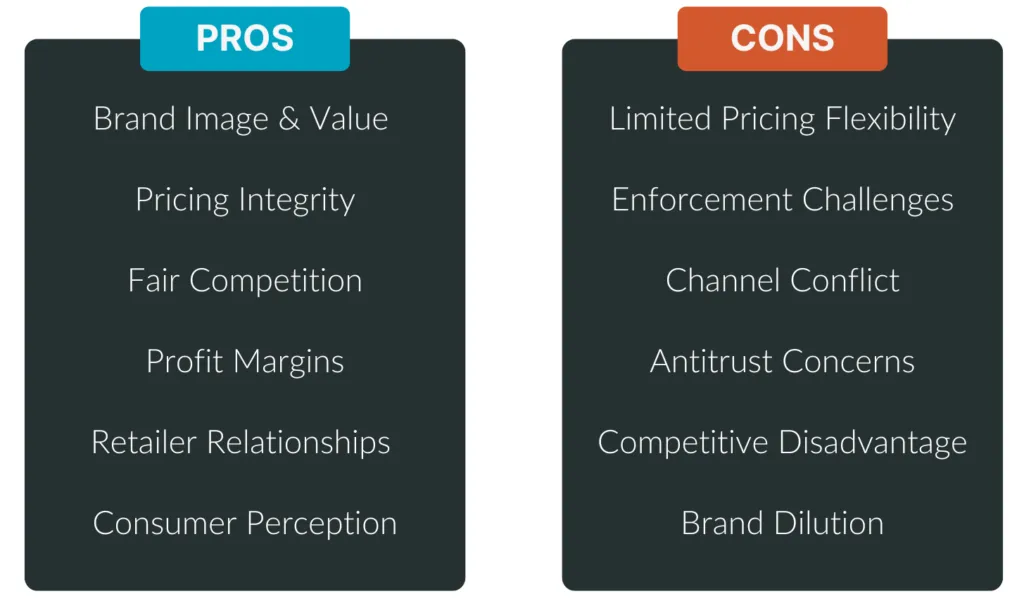
While MAP (Minimum Advertised Price) pricing offers various benefits, there are also potential drawbacks for brands:
In conclusion, while MAP Policies offer benefits in terms of brand image and control, brands must carefully navigate the potential downsides, including limited pricing flexibility, enforcement challenges, the risk of channel conflict, antitrust concerns, competitive disadvantages, and the potential for brand dilution. Successful implementation requires a strategic, balanced, and professional approach.
MAP (Minimum Advertised Price) pricing is generally legal in many jurisdictions, including the United States. MAP policies are considered a form of Unilateral Pricing Policy (UPP) in which manufacturers set the minimum price to advertise their products, allowing retailers to determine their selling price.While establishing a minimum advertised price is legal, manufacturers must carefully structure and communicate their MAP policies to avoid potential antitrust concerns. Collaboration between manufacturers and retailers is voluntary, and brands should not engage in illegal price-fixing activities. Enforcement of MAP policies is within the rights of manufacturers, and they may choose to discontinue partnerships with retailers who consistently violate these policies. Brands must consult legal experts and adhere to relevant regulations to ensure their MAP pricing strategies comply with local, federal, state, national, and international laws and do not infringe upon fair competition practices.
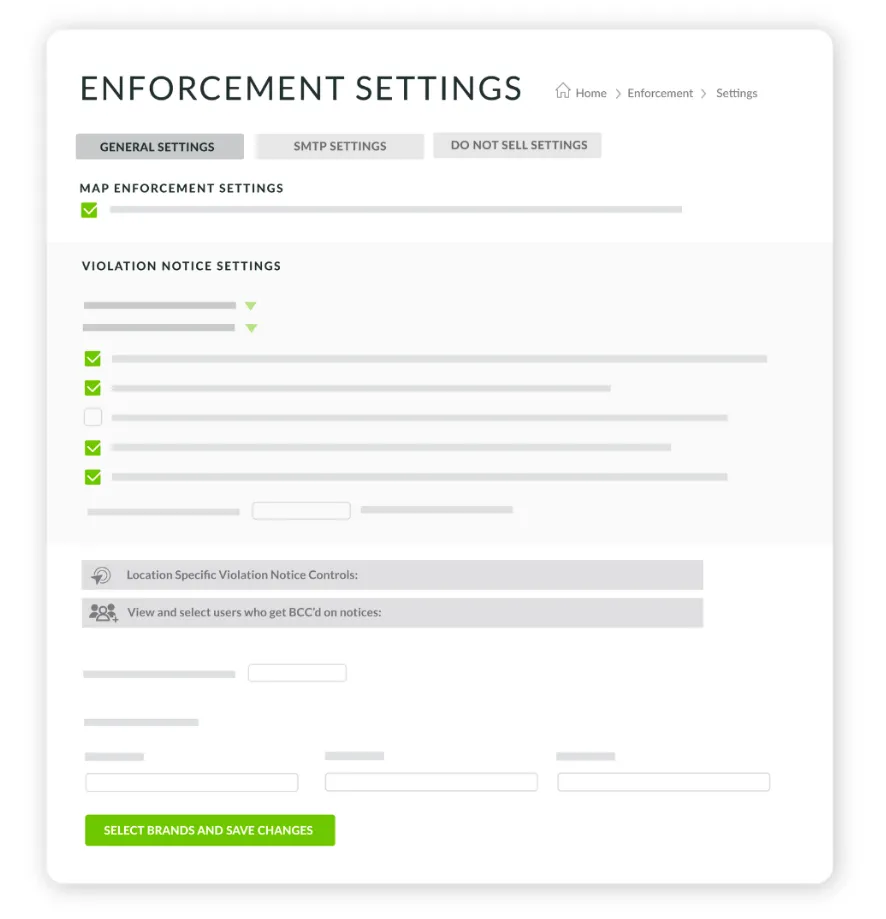
To effectively enforce Minimum Advertised Price (MAP) pricing strategies, a comprehensive approach is needed to ensure retailer compliance and maintain a consistent brand image across all involved parties. Here are key steps to enforce MAP pricing effectively:
To set the proper MAP for each product, manufacturers must balance maintaining a consistent brand image and providing retailers with flexibility. The correct MAP should consider production costs, desired profit margins, market conditions, and competitive dynamics. It should be a price that reflects the product's value while allowing for healthy competition among retailers.When the MAP is reasonable and aligns with market expectations, it increases the likelihood that retailers will voluntarily comply. Transparency is the key here. Additionally, a well-calibrated MAP minimizes the risk of antitrust concerns and fosters a collaborative relationship with retailers who recognize the fair and strategic nature of the pricing policy. In essence, setting the correct MAP establishes a foundation for effective enforcement and future partnerships by creating a pricing structure that is both realistic and beneficial for all stakeholders in the distribution chain.
Like every healthy relationship, clear and transparent communication should be a driving factor when enforcing effective MAP (Minimum Advertised Price). This practice fosters a shared understanding of the reasons behind the MAP policy and its benefits for manufacturers and retailers.By engaging in open dialogue, manufacturers can educate retail partners about the importance of maintaining consistent pricing to uphold the brand's value and image. Providing detailed documentation, hosting training sessions, and establishing open channels for questions and feedback contribute to a collaborative partnership.
Effective communication also involves conveying the consequences of MAP violations and the potential benefits of adhering to the pricing policy. Regular updates on market conditions, product releases, and changes to the MAP policy help keep retailers informed and engaged. This collaborative approach builds trust and encourages voluntary compliance, making it more likely that retail partners will understand and support the brand's pricing strategy, leading to more effective and harmonious enforcement of MAP policies.
Automated tools and software solutions enable manufacturers to monitor advertised prices in real-time across various online and offline channels. These technologies can swiftly identify deviations from the established MAP and pinpoint unauthorized resellers, allowing timely intervention and enforcement.By fully or partially automating the monitoring process, manufacturers can efficiently track a wide range of products and retailers, ensuring comprehensive coverage within a short period and fewer resources spent. Additionally, technology provides the ability to generate reports and analytics, offering valuable insights into pricing trends, market dynamics, and areas of potential non-compliance.This data-driven approach facilitates quick response to violations of authorized and unauthorized retailers and enables manufacturers to adapt their MAP pricing strategies based on evolving market conditions. In essence, leveraging technology for monitoring enhances the efficiency and effectiveness of MAP enforcement, contributing to a more streamlined and proactive approach to maintaining pricing integrity across a brand’s distribution chain.
Here are some frequently asked questions (FAQs) related to MAP (Minimum Advertised Price) pricing:
Violating Minimum Advertised Price (MAP) policies set by brands can result in various penalties for retailers, including warnings, temporary suspensions from receiving new inventory, or, in more severe cases, termination of the business relationship with the manufacturer.Brands may also restrict cooperative marketing efforts or exclude non-compliant retailers from promotional activities. The severity of the penalties often depends on the frequency and degree of MAP policy violations, intending to encourage compliance and maintain pricing integrity across distribution channels.
That would depend on the type of product. For perishable goods, the best approach to ensuring a MAP’s relevance in dynamic market conditions is to review it weekly, ideally on a Friday afternoon, and apply the necessary adjustments by Monday morning. Perishable products have a short shelf life, and selling them without a price reduction in deteriorated conditions would spark issues of pricing malpractice.
However, the frequency of reviews and adjustments must be heavily influenced by the market's current stability to which a specific product belongs and its level of freshness. The more volatile the market and the closer the goods are to expiration, the more frequent reviews and adjustments should be made.As for dry goods like technology, clothes, and most grocery items with long shelf lives, their reviews and adjustments are typically conducted quarterly or semi-annually. Additional factors such as changes in production costs, competitive landscapes, shifts in consumer demand, and seasonalities can influence the effectiveness of existing MAP policies while triggering the need for off-schedule reviews and adjustments. This is very important because consumers and competitors are looking to avail, implement, and take advantage of discounts depending on special times of the year, like changes in seasons, Black Friday, Thanksgiving, Christmas, and New Year.
No, not all manufacturers use Minimum Advertised Price (MAP) pricing. While MAP Policies are a common strategy many manufacturers employ, they are not universally adopted across all industries or product categories.
Some manufacturers may choose alternative pricing strategies or a more flexible approach, allowing retailers greater freedom to set advertised prices. The decision to implement MAP pricing depends on factors such as the nature of the product, market dynamics, and the manufacturer's specific business goals and values.
By establishing a baseline expectation for product pricing and perceived value, MAPs gain the power to impact consumer behavior. When consumers consistently encounter a minimum advertised price across various retailers, it reinforces the notion of a standard value for the product, contributing to brand loyalty and trust.
MAP pricing can also deter aggressive discounting, maintaining the product's perceived quality and exclusivity. However, if MAP pricing is set too high compared to market expectations, it may drive price-sensitive consumers away, impacting sales. A MAP shapes consumer perceptions of a brand's value proposition, affecting purchasing decisions and brand loyalty.
As a manufacturer or retailer, you don’t want to deter target customers with expensive price tags. Conversely, you do not want to give them the wrong idea that a product is low quality due to an illogically low value.
For retail store owners, MAP Policies may not be a requirement. They can sound disadvantageous due to their price flexibility-restricting nature, but it’s a great guideline to leverage, especially if you’re new to the industry. Through this regulation, you can fairly compete with veterans and even better-funded rivals without spending extra resources.
The advantages of MAP pricing far outweigh the disadvantages for manufacturers or brand owners. It lets you quickly achieve a stable revenue stream, constantly grow a loyal customer base, and secure your business’s integrity. Yet, the best perk is that the Minimum Advertised Price system gives you additional control over your business's future direction.
Websites + Marketplaces Tracked
Merchants Tracked
of Automated Actions Initiated Monthly
of Data Points Tracked
